I've been having a conversation with Randy Schaefer, who is understandably unhappy with the coverage here of the Tax Increment Finance district Madison created for his housing development. Randy
can live with my posts; it's the
negative and cowardly anonymous comments that raise his hackles.
Local blogs can raise hackles... but on the whole, that's a good thing, especially in era when we see the mainstream media retreating from its duty to serve the public. The
New York Times itself
points to the rising importance of new media. While maintaining its disdain for most of us ("an Internet landscape long dominated by partisan commentary, gossip, vitriol and citizen journalism posted by unpaid amateurs"), the Gray Lady speaks approvingly of professional journalists who have set up their own non-profit shops in
places like San Diego to dig into local politics, bring questionable policies and expenditures to light, and drive further media coverage by the mainstream journalists.
Other cites rallying professional and citizen journalists to do this kind of local coverage abound:
These local news websites all operate in markets where there are plenty of newspapers and radio and TV stations. Yet the movers and shakers behind those news sites look around and see important issues going unmentioned, or undermentioned.
That's what I'd like to think blogs like the Madville Times can do. Madison's lucky to have its own
newspaper and
radio station, but even MDL and KJAM don't catch every issue (and neither do I!). They certainly don't air every voice—anyone care to guess how many letters to the editor Jon Hunter has rejected in the pasy year?
Even in our small market, there is a place for more voices, more folks speaking up and investigating how their city and county and other organizations spend tax dollars. I do a little bit of that. Sometimes, so do my commenters (
good work, John!). Think of it as collaborative community journalism: I start a story by mentioning a few facts and asking some questions, and readers then build the story by contributing their observations, giving context, pointing out errors in my own statements and others' comments.
This is going to sound crazy coming from someone who
hates cooperative learning... but that's how journalism can work now. We can use the Internet to work together, to collaborate in telling the stories that are important to our community... and in keeping an eye on the powers that be.
Randy and the New York Times are right: this medium—not just the Madville Times, but the whole darn Internet, where any honyocker can start a blog—does facilitate negative, envious, unsubstantiated name-calling and other irrelevant baloney from chicken-hearted wimps who lack the courage to face us, their neighbors, and back their words with their names (and a fact or two). But this medium doesn't create that negativity: it exposes ill will and flawed thinking that are already there in the community. In a way the for-profit media can't or won't, this medium draws out the ills in our community, whether they include the errors and occasional chicanery of public officials or simply the ill-founded suspicions, jealousies, and prejudices of the people we live with. Drawing out those ills allows us to challenge and maybe even fix them. And that's a net plus for any community.
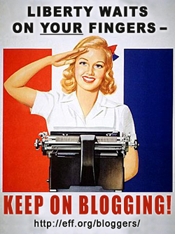
The Madville Times continues. So do the comments. Keep up the conversation!




 This blog printed on 100% recycled electrons.


